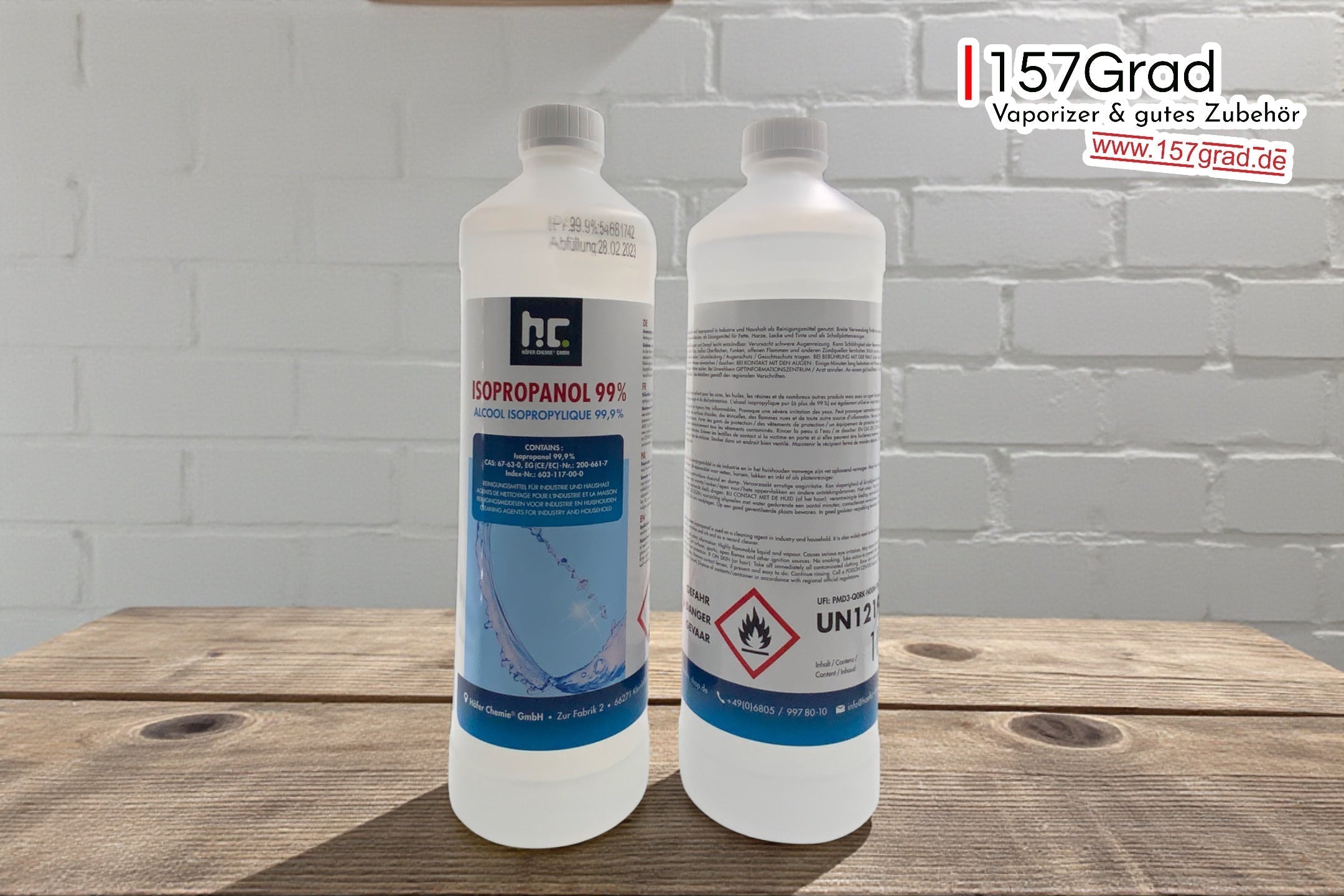
Clean vapor isn't a matter of chance, but the result of small everyday decisions. Rubbing alcohol plays a key role because it dissolves residues without unnecessarily burdening your device. Using it correctly preserves flavor, airflow, and functionality for a long time and avoids typical maintenance mistakes.
The following article explains application, dosage, and material compatibility in a practical and straightforward manner. You'll learn how to clean effectively, when less is more, and which routines have proven successful. At the end, you'll also find concise FAQs that clearly answer frequently asked questions and provide quick guidance.
Cleaning your vaporizer can change the flavor and airflow faster than you think.
Deposits build up in both stationary and portable vaporizers more quickly than many people realize. Even after just a few sessions, the flavor suffers because dirt accumulates in the herb chamber, on the screen, and in the mouthpiece. The vapor becomes heavier, less clear, and loses its smoothness. This is precisely where regular cleaning determines whether your device is performing at its best. With the right cleaning agent, residues can be removed effectively, restoring the desired purity without unnecessarily damaging the materials.
Practical example: How you can tell that residues noticeably affect the steam
-
the taste turns scratchy or slightly bitter
-
The airflow becomes noticeably slower, even though the temperature and fill level are correct.
-
A dark, sticky layer adheres to the sieve; the mouthpiece appears dull.
Typical deposits form primarily where steam cools and condenses. For quick fixes, a simple touch is often all it takes. Use LimPuro King Wipes XL cleaning wipes for loose particles, then an alcohol-based cleaner or rubbing alcohol for removable parts. Apply briefly, let dry, and the airflow will immediately feel clearer.
How to use rubbing alcohol in everyday life, so you can work safely and cleanly.
What is rubbing alcohol? The definition ranges from IPA to denatured alcohol, depending on the application and purity. Rubbing alcohol is a clear liquid that acts as a solvent and dissolves resin and grease. It is used for cleaning removable vaporizer parts, such as the... Arizer XL mouthpiece for Arizer Solo 3 90mm means: residues dissolve, the surface becomes residue-free and cleanliness increases because the alcohol effectively works as a degreaser and grease remover.
Safety is paramount when handling: ensure good ventilation, use only small amounts, and allow for rapid evaporation. Avoid skin contact, wash off any splashes immediately, and store the alcohol away from heat sources. Keep it tightly closed and out of reach of children.
After use, rinse the parts if the material and manufacturer's instructions recommend it. Let everything dry completely before using the vaporizer again; otherwise, odors and irritation may persist. If you buy in bulk, half a liter is often sufficient, as rubbing alcohol is versatile.
Isopropanol is popular, but you need to properly assess the material and components.
Isopropanol, such as the 99.9% isopropanol (IPA) available here in our shop, is considered by many to be a universal cleaner because it can quickly dissolve resin and grease as a solvent. However, for your vaporizer, a material check is still essential: not every surface reacts the same way, and paints are often sensitive. Only use high-proof rubbing alcohol where the component can tolerate it, and work with a small amount of liquid rather than a full bath.
Material check for isopropanol on the vaporizer
|
component or surface |
reaction |
Recommendation |
|---|---|---|
|
Glass, ceramics |
usually robust |
Briefly wipe or briefly immerse |
|
Stainless steel, aluminum |
usually robust |
Use sparingly, then dry. |
|
silicone seals |
partly sensitive |
Just wipe briefly, do not soak. |
|
plastic parts |
often critical |
Test first, clean gently if necessary. |
|
Painted surfaces |
risky |
Avoid, check special cleaners |
Electronics, heating chamber and seals, such as those in the Storz & Bickel sealing ring set for the Venty vaporizer , which you should not soak. The rule of thumb is: if you are unsure, use a gentle method with warm water and a suitable specialty cleaner instead of soaking for a long time. Disinfection is a separate goal and should not be automatically assumed.
Use isopropyl alcohol carefully so that your vaporizer doesn't taste like alcohol.
Isopropyl alcohol is practical because it quickly dissolves residue on the mouthpiece, screen, and glass, and evaporates cleanly. To prevent your Veazy Vaporizer or Pax Flow from tasting of alcohol afterward, use only a small amount of liquid, keep the contact time short, and dry thoroughly. Use it only on removable parts and keep the heating chamber and electronics completely dry.
Steps for odor-neutral cleaning
-
Clean the removable parts with a slightly damp cloth or cotton swab.
-
Wipe immediately until the surface appears dry and no puddles remain.
-
Air the parts out until there is absolutely no smell left.
-
Check the air passage and seals before you reassemble everything.
Usually, a few drops are enough, because isopropyl alcohol is a very effective solvent for dissolving resin. If the taste afterwards is "medicinal" or harsh, it was almost always too much: Disassemble again, wipe with warm water, dry longer, and start with a short empty heating cycle if your portable or desktop vaporizer allows it.
Use alcohol sparingly during cleaning, without stressing plastic and seals.
When cleaning a vaporizer, the dosage is crucial: alcohol works quickly, but can unnecessarily stress plastics and seals if left on for too long. A short contact time is therefore often the better choice, as you dissolve residues without softening or drying out the material. A few drops are usually sufficient; a whole liter is more of a supply than a quantity for most households.
Cotton swabs, such as the Black Leaf Blazing Mops cleaning sticks are ideal for air ducts, screen edges, and corners because they allow for precise cleaning without flooding. Use a soft cloth for smooth surfaces and a brush only if the bristles won't scratch. Work with gentle pressure and wipe dry immediately afterward.
As a preventative measure, frequent, brief cleaning after several sessions is helpful. This keeps the airflow clear and means you rarely need to soak the racket for long periods. If residue does build up, gradually increase the cleaning frequency instead of immediately resorting to harsh methods.
Establish a rubbing alcohol routine to keep your device reliable for a long time.
A good routine with rubbing alcohol keeps a vaporizer like the Mighty+ flavorful and reduces malfunctions caused by build-up residue. The schedule depends on what you can actually stick to: remove crumbs after every session, clean the airflow weekly, and perform a more thorough cleaning of the removable parts monthly. Avoid using household cleaners on the mouthpiece or screen, as residues and fragrances can be heated later.
Here's how to build a practical cleaning routine
-
After each session: Tap out the sieve and brush it dry.
-
Weekly: Wipe mouthpiece and screen with a small amount of rubbing alcohol.
-
Monthly: Briefly immerse glass or metal parts and allow to dry completely.
-
Always check contact surfaces, seals and the air duct first.
-
Finally: air everything out to remove any odors before vaping again.
Regarding hygiene: the fresher the resin is when you clean, the less likely it is that old resin will come into contact with steam later. Disinfection is a separate requirement and does not replace thorough drying.
Conclusion: Using rubbing alcohol will keep your vaporizer permanently clean and stable.
Using rubbing alcohol makes maintaining your vaporizer predictable: minimal effort, clean flavor, and unobstructed airflow. From now on, you'll keep it simple and regular, instead of waiting for resin to bake on. You'll clean removable parts sparingly, allow everything to dry completely without odor, and never immerse the heating chamber in liquid.
Three key points for safe use and good steam: Use only a small amount and work precisely. Keep electronics, heating elements, and seals dry, and handle sensitive plastics with care. Ventilate and dry until no alcohol odor remains.
The next step is to invest in a small vaporizer cleaning kit: cotton swabs, a soft brush, lint-free cloths, and replacement screens. An extra mouthpiece or a fresh pack of seals will save you time when you're on the go.
Frequently Asked Questions (FAQs) about cleaning alcohol
Where can I buy rubbing alcohol for cleaning?
You can buy rubbing alcohol in pharmacies, drugstores, and sometimes even in hardware stores. It's also available online, often in different concentrations. Make sure the product is intended for cleaning purposes and doesn't contain any additives. For vaporizer cleaning, clear labeling and clean packaging are more important than the cheapest price.
Where can I get the purest possible alcohol for cleaning?
You can usually get very pure alcohol at a pharmacy or from reputable online retailers. It's important that it's labeled as rubbing alcohol or isopropanol. Check the label and safety information to make sure you don't buy any perfumes or denaturants.
Where can I find high-proof alcohol for cleaning equipment?
You can often find high-proof alcohol in pharmacies, sometimes also in drugstores or online. For sensitive parts of your vaporizer, material compatibility is more important than "maximum strength." It's better to use a suitable product and apply it for a short time.
Which alcohol is best suited for cleaning?
Isopropanol or isopropyl alcohol is commonly used for most vaporizer parts because it effectively dissolves residues and evaporates quickly. It's crucial that you only treat removable, alcohol-compatible parts. Electronics and the heating element should remain dry. If your device has sensitive plastics or seals, test carefully on an inconspicuous area first.
What can I use for cleaning instead of alcohol?
For light soiling, warm water, mild dish soap, and a brush are often sufficient. For stubborn resin, special, material-friendly cleaners designed for vaporizer accessories can sometimes help. If you avoid using alcohol, allow more time and clean more frequently.
What costs should I expect for cleaning alcohol?
Prices depend on quantity, concentration, and source. It's often a bit more expensive in pharmacies, but you can get larger containers cheaper online. A small bottle usually lasts a long time for vaporizer maintenance.
How can you visually identify cleaning alcohol?
Rubbing alcohol is usually colorless and clear like water. It has a distinct alcoholic odor and evaporates quickly.
How do I dispose of cleaning alcohol properly?
Only allow small quantities to evaporate completely if it can be done safely and in a well-ventilated area. Larger quantities or contaminated alcohol should be disposed of at hazardous waste collection points or local recycling centers.
What percentage of alcohol does a typical alcohol-based cleaner contain?
Alcohol-based cleaners typically have a concentration of around 70 to 99 percent, depending on the product. The appropriate concentration depends on what you're cleaning and how sensitive the material is. For vaporizer parts, the most important thing is to let it soak in briefly and then dry it thoroughly.
What can I use rubbing alcohol for?
You can use it to remove residue from many smooth, non-sensitive surfaces, such as glass and metal parts. It's particularly suitable for vaporizer screens, mouthpieces, and other removable components. Avoid contact with electronics and test compatibility on plastic parts first.
What is actually made of rubbing alcohol?
It usually consists of isopropanol or ethanol and may be mixed with water depending on the product. Some variants contain additives that are unsuitable for sensitive applications.
Where can I get cleaning alcohol quickly and reliably?
The quickest way to get it is often at a pharmacy or drugstore, or alternatively online with delivery. Make sure it's clearly labeled and the concentration is right for your cleaning needs. For vaporizer accessories, it's worth investing in high-quality, clean products rather than unknown mixtures.